
Data Centre Security
A comprehensive guide to safeguarding data centres against cyberattacks, data breaches, natural disasters, terrorism, aircraft accidents and infrastructure failure — and to restoring services when prevention is not enough
A comprehensive guide to safeguarding data centres against cyberattacks, data breaches, natural disasters, terrorism, aircraft accidents and infrastructure failure — and to restoring services when prevention is not enough

Frontier models.
On hardware you own
Local models in your preferred harness.
Setup a cluster with ease.
Connect your devices via Thunderbolt or USB-C. See your cluster and manage your models from one dashboard.
Make room for bigger models
Exo distributes a model across your devices and optimizes runtime parameters for turnkey simplicity.
Deploy Local AI seamlessly.
Connect through familiar API formats: OpenAI Chat Completions, Responses, Claude Messages, and Ollama.

A low-level high-performance C/C++ inference engine built on ggml, designed for running LLMs locally with minimal dependencies. It directly handles tensor operations, quantization support and execution. Acts as the foundation layer for many other tools.
Ollama is an open-source tool that allows you to run large language models (LLMs) directly on your local machine. This makes it ideal for AI developers, researchers, and businesses prioritizing data control and privacy.
By running models locally, you maintain full data ownership and avoid the potential security risks associated with cloud storage. Offline AI tools like Ollama also help reduce latency and reliance on external servers, making them faster and more reliable.
This article will explore Ollama’s key features, supported models, and practical use cases. By the end, you’ll be able to determine if this LLM tool suits your AI-based projects and needs.
A higher-level local LLM runtime that wraps llama.cpp and related backends into a package system. It adds model lifecycle management, a runtime daemon, API layer and developer tooling on top of the underlying inference engine.
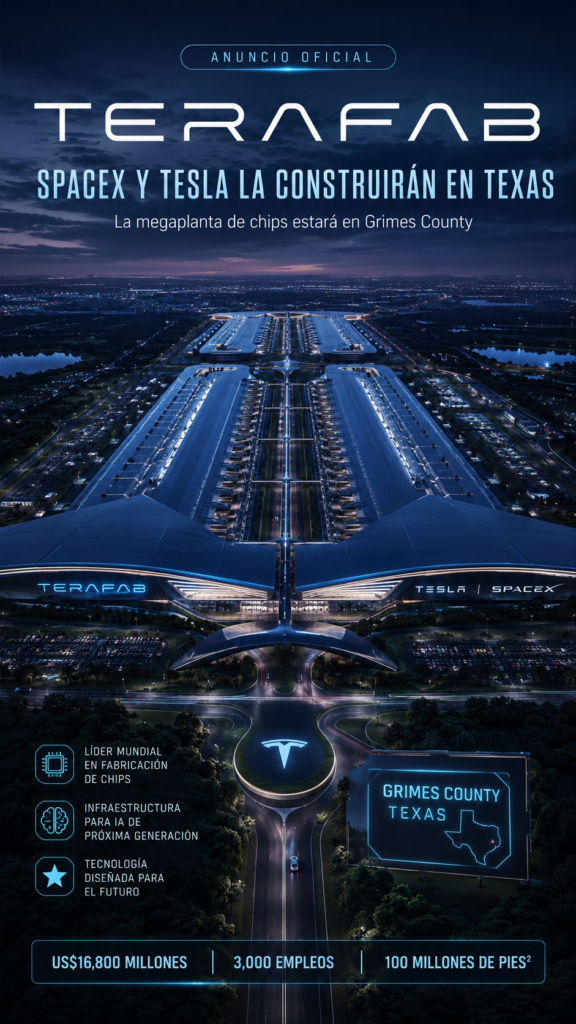
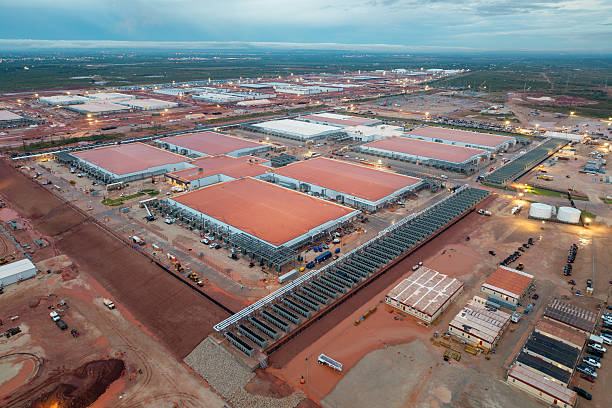
Terafab is Elon Musk’s proposed attempt to build a semiconductor manufacturing system on a scale intended to serve Tesla, SpaceX and xAI. It is not simply another Tesla factory. The project aims to combine chip design, advanced logic fabrication, memory production, photomasks, packaging and testing within a vertically integrated operation capable of supporting autonomous vehicles, humanoid robots, large AI models and, eventually, computing infrastructure in space

The content now compares:
Cyborgs and agentic cyborgs
Replicants
Androids and agentic androids
Narrow AI, AGI and ASI
Reactive, limited-memory, theory-of-mind and self-aware AI
Generative, predictive, conversational and agentic AI
Present-day capabilities versus likely future development
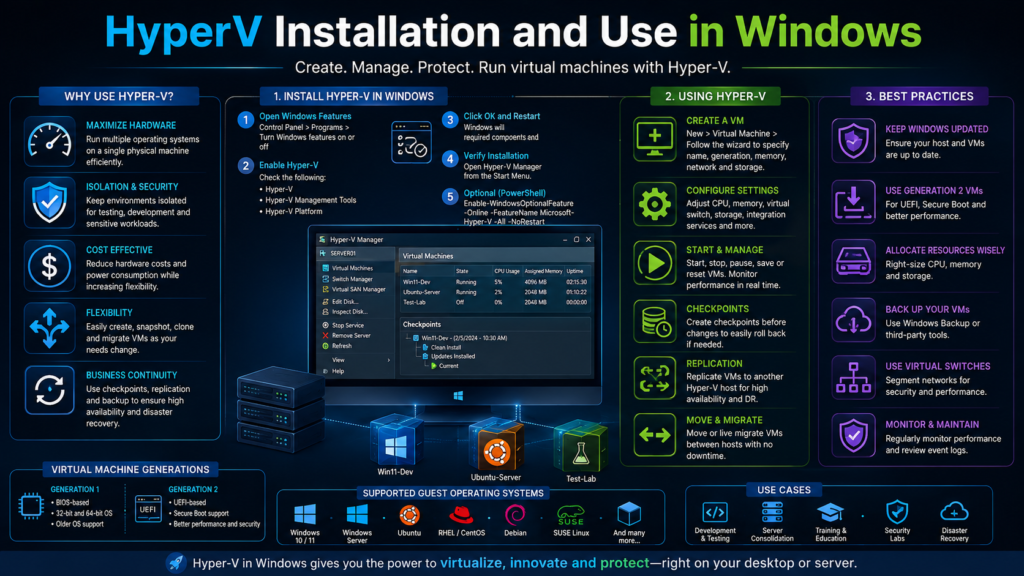
Hyper-V is Microsoft’s built-in virtualisation platform for supported editions of Windows. It allows multiple isolated virtual machines to run on one physical computer, making it useful for software testing, development, training, server consolidation, isolated browsing, and building repeatable lab environments

Securing Online and Local Backups. Securing Online and Local Backups from Ransomware and Hacking. A backup is only useful if
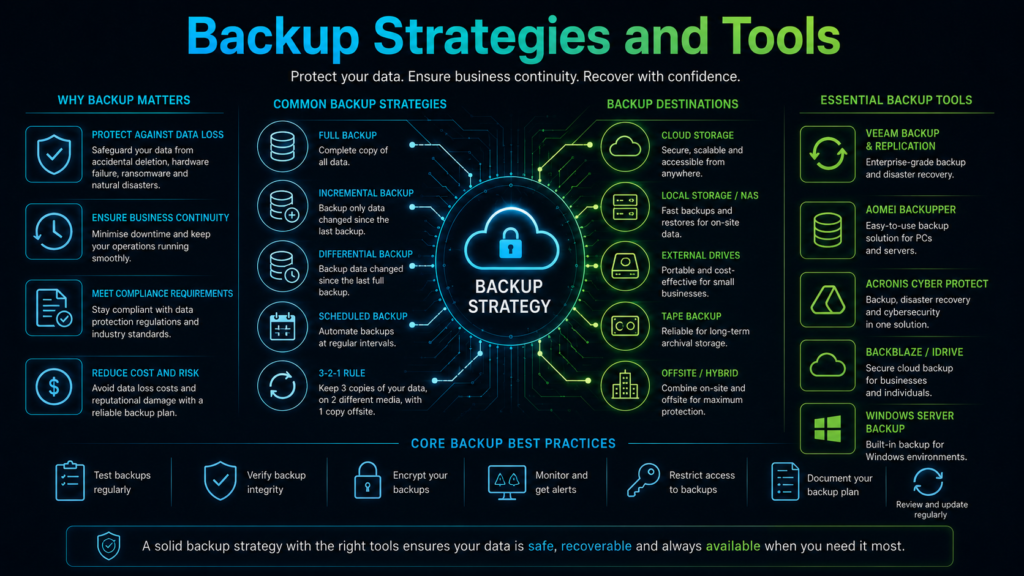
A professional backup strategy protects a business against data loss caused by hardware failure, human error, software corruption, theft, natural disaster, and ransomware. It combines the right tools, a clear schedule, tested recovery procedures, and enough redundancy that no single failure can destroy the only copy of important data

LM Studio is a desktop application for downloading, managing and running compatible large language models on a local computer. It provides a graphical chat interface, local document interaction, model-management tools and an API server that can connect local models to other applications

Python is a widely used programming language for automation, web development, data analysis, artificial intelligence, scientific work and system administration. It is relatively easy to begin using, but a structured setup is essential if projects are to remain reliable, secure and maintainable
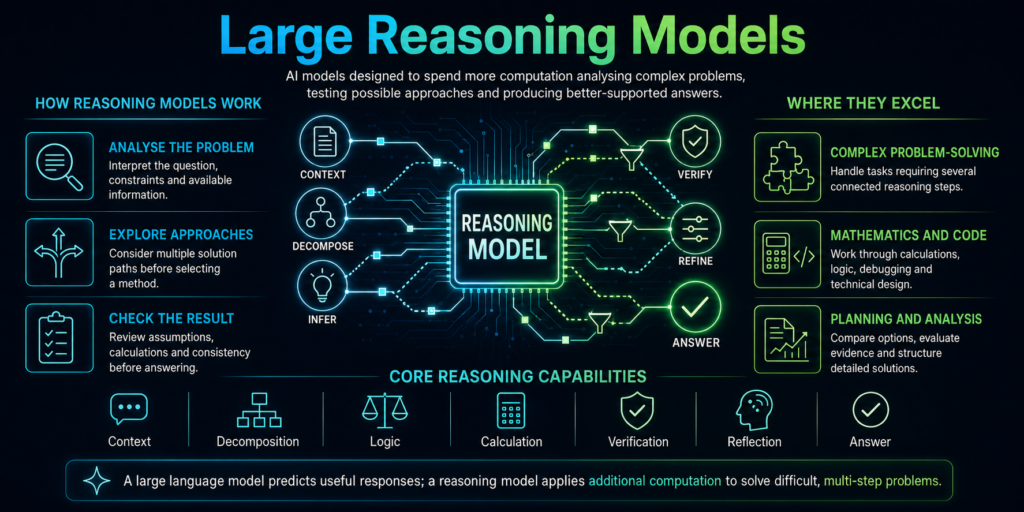
Large reasoning models are advanced artificial intelligence systems designed to spend more computational effort analysing a problem before producing an answer. They are particularly useful for tasks that require several connected steps, careful planning, logical deduction, mathematical analysis, coding or the comparison of competing possibilities….
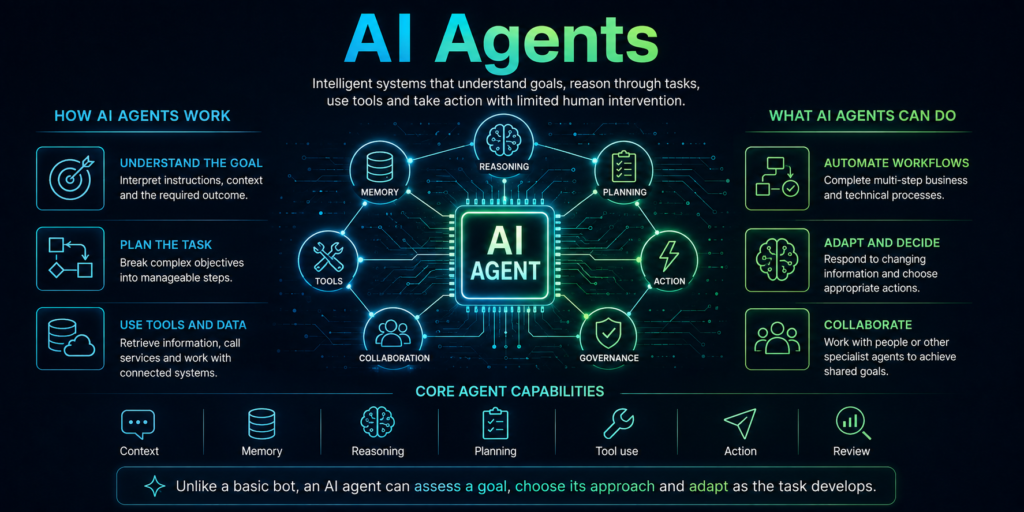
Creating an AI agent involves more than connecting a language model to a chatbot. A reliable agent needs a clearly defined objective, controlled access to tools and data, a structured decision process, security boundaries, testing, monitoring and human oversight…..
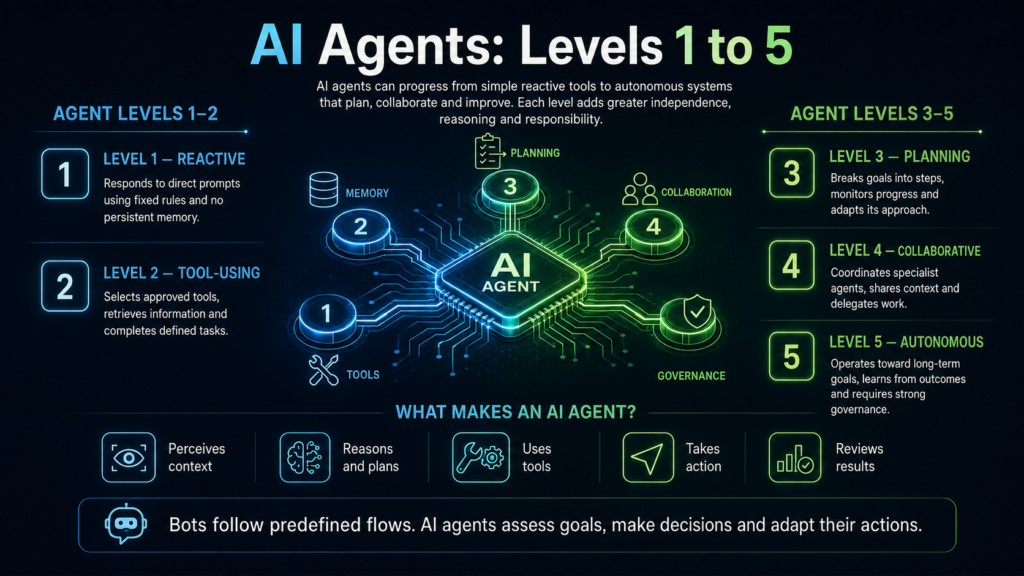
AI agents are software systems that can understand a goal, decide what to do, use tools, take action and adapt as work progresses. They range from simple systems that respond to one instruction at a time to highly autonomous systems capable of planning and coordinating complex work….
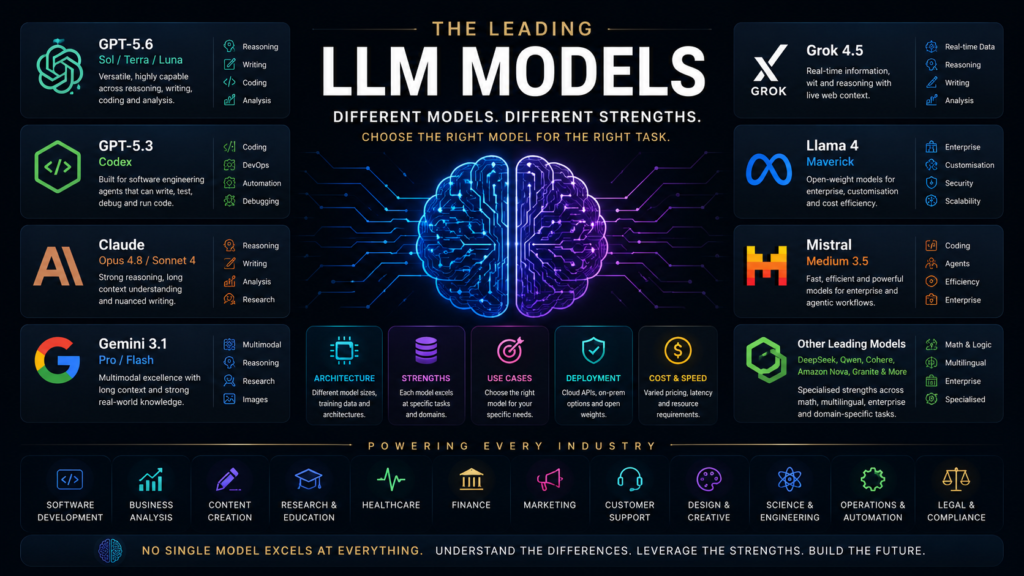
Current Large Language Models and What They Generate Best (TickTockIT) Large language models are no longer interchangeable chatbots. Current model
Not all LLM’s are the same in terms of strengths and weaknesses. Asking the right question demands that the use knows what they want and understand the subject matter and technical details. Otherwise a lot o time will be wasted. Also, ,the correct model for the task required is essential
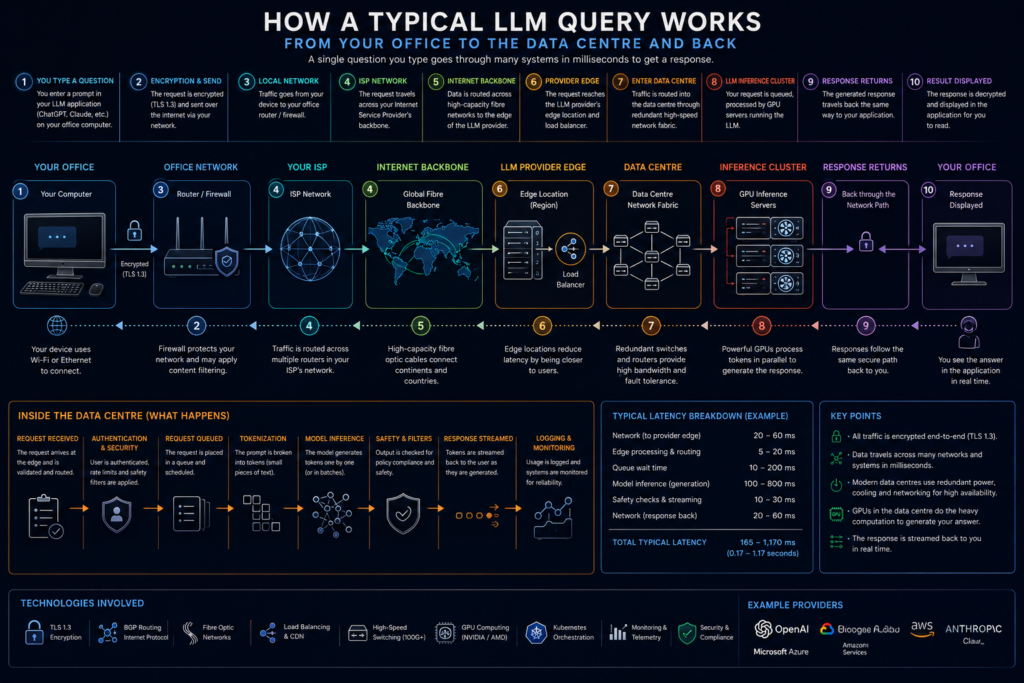
A single LLM query travels through far more infrastructure than most users realise.
It begins on an office computer, where the request is encrypted and sent through the local network.
From there, it passes through the router, ISP, and high-capacity internet backbone.
The request then reaches the AI provider’s edge network and is routed into a data centre.
Inside the facility, load balancers and network switches direct it to the correct inference servers.
…..
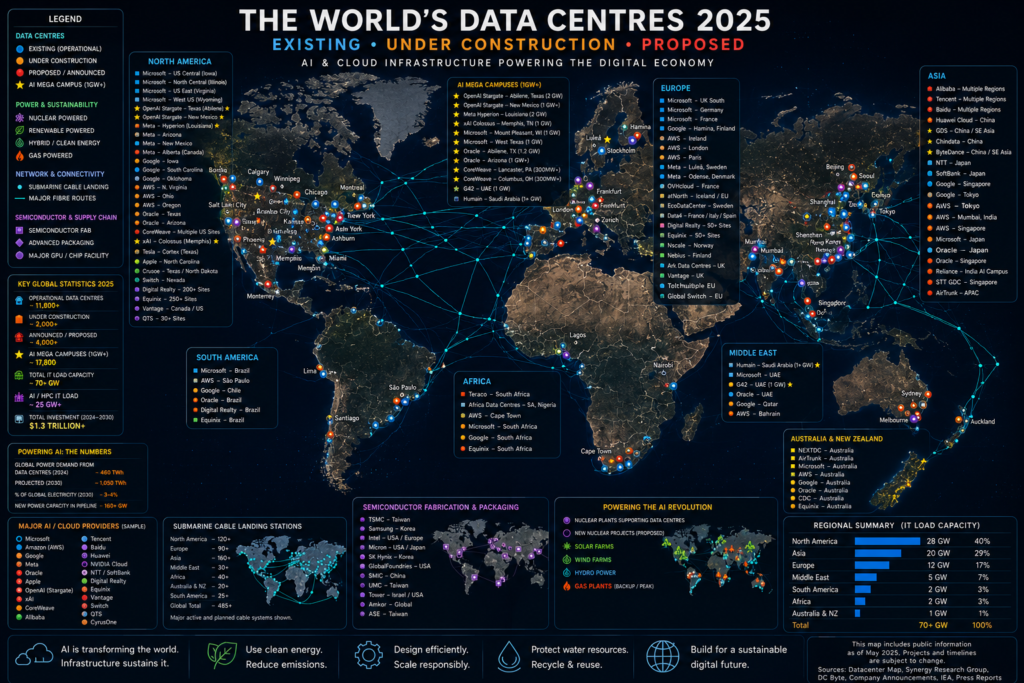
Artificial Intelligence is transforming the world—but at what environmental cost? Discover how AI is increasing demand for electricity, water, data centres and semiconductor manufacturing, while also helping tackle climate change through smarter energy systems, scientific research and sustainable innovation. Explore the challenges, opportunities and future of AI’s environmental impact…
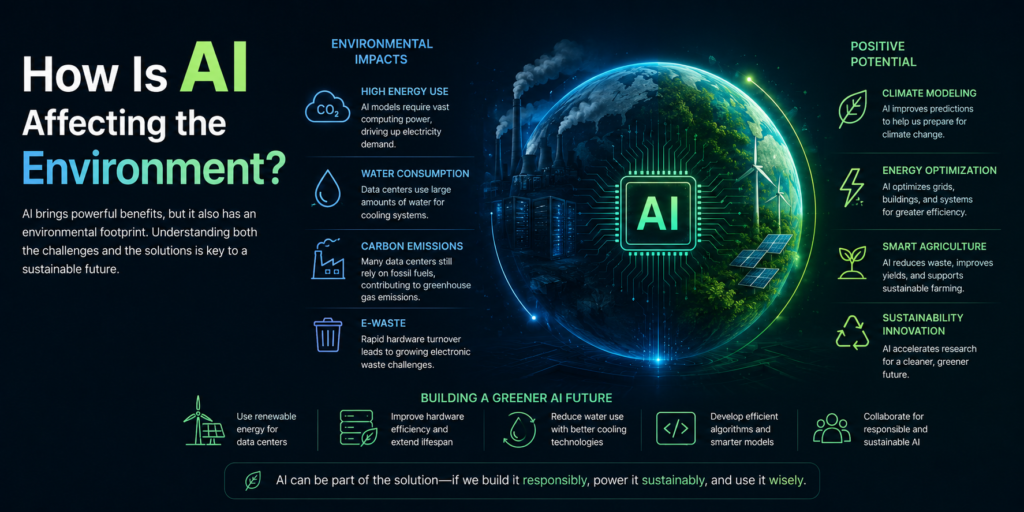
Artificial intelligence is transforming software, business, healthcare, science, transport, media, and public services. Behind every AI response, however, is a physical infrastructure of data centres, processors, cooling systems, electricity networks, water supplies, mines, factories, and global supply chains,,,