Third-Party Content Disclosure
The videos, posts, and other resources featured on this website are created and owned, fully or in part, by third-party individuals, organisations, and companies, unless explicitly stated as being created and owned by TickTockIT as denoted by (TickTockIT) after the title. TickTockIT does not claim ownership of this content and is simply providing access to information that may be useful to visitors.
The views, opinions, advice, and technical information contained within these materials are those of the original creators and do not necessarily reflect the views of TickTockIT. While we aim to share content from reputable sources, we make no guarantees regarding its accuracy, completeness, or suitability for any particular purpose.
All copyrights, trademarks, and intellectual property rights remain the property of their respective owners. By using this website, you acknowledge that TickTockIT acts solely as an information provider and accepts no liability for the use of, or reliance upon, third-party content.
No matching results found
Loop Grid IT Posts Static

Ai and the Environment
Artificial intelligence is transforming software, business, healthcare, science, transport, media, and public services. Behind every AI response, however, is a physical infrastructure of data centres, processors, cooling systems, electricity networks, water supplies, mines, factories, and global supply chains,,,

What is Codex ?
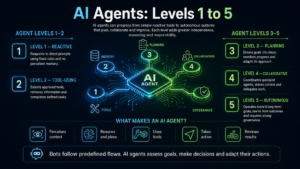
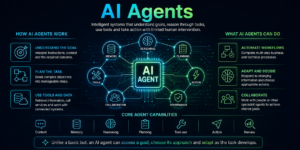
Codex is best understood as an AI coding agent rather than a simple code generator. A code generator usually responds to a prompt by producing a snippet of source code. An agent can perform a sequence of connected actions in pursuit of a larger objective.
For example, a developer might ask Codex to add a customer export function to an existing PHP application. Codex can inspect the project, locate the relevant database queries, identify the user interface, add the export logic, update the page, run available checks, and summarise the resulting changes…


Open ai
AI agent with access to files, terminals, browsers, credentials or remote systems needs boundaries. Use separate development environments, avoid exposing unnecessary secrets and keep production deployment under explicit human approval